Showing posts with label mountain. Show all posts

Monday, 20 October 2014

Roche Moutonée

TO begin, if you have never seen nor heard of a roche moutonée, fear not! You have come to right place, here at Fell within the Fell Words section we look at the meanings behind some of things hillwalkers come across all the time but sometimes go unnoticed or just never get researched. One thing is for certain we guarantee you will have seen one of these!

A roche mountonêe is a glacial trough formation and it’s name originates from the french words for rock sheep, because some look like a sheep in a field from a distance. 

The distinctive feature of a roche moutonée is it’s shape, it has a smooth inclining stoss (up valley) surface and a rough jagged steeper lee (down valley) slope. 

A brilliant example of a roche moutonée in the
Nant Ffrancon glacial valley.
The formation occurs as a glacier advances down valley and it comes into contact with a mass of resistant hard rock. It can't erode the resistant rock so the glacier has to move over it. Due to the increase in pressure some of the ice melts at the glacier bed and causes basal sliding. As the glacier moves up and over the resistant outcrop debris or moraine scratch the surface of the rock and leave striations that are still visible today.

On the downslope of the the roche moutonée the surface changes dramatically, the gradient steepens and the smooth striated facia of the stoss side is all gone. 

Now as the pressure that previously melted the ice at the bed of glacier reduces the water refreezes while in contact with the lee side. Plucking then occurs leaving a jagged, sharp and angular surface to this side of the formation. 

In terms of size, the formations vary greatly, some can be one or two metres in length others can be around 100. Keep your eyes peeled when out and about in area of glacial history as once you are familiar with the standout shape you will recognise them frequently.
A diagram showing the formation of a roche moutonée.

A good place to spot loads of these features is in the valley leading up to Easedale Tarn from Grasmere, Cumbria. Littering the valley floor either side of the Easedale Beck you will see an array of examples large and small so be sure to check that out. 

As always thank you for taking the time out of your day to read this, but I need you to do one more thing! Get your email put in the sub box and be notified when any new content goes live. Please hit that +1 button and tell us about any good examples of roche moutonées you can think of in the comments.

Check out our Twitter which is @teamfell and our youtube channel which shares the same name. If you are interested in some outdoor apparel and are happy to support the site, head over to our SpreadShirt online shop and get yourself a nice bit of Fell clothing. 

As always, 

Cheers


#TeamFell

Tuesday, 14 October 2014

Adidas Terrex Fast R Mid Gore-Tex Boot Review

TO begin, these are my everyday boots, they have done plenty of miles so this review is full of real life information.

Just an overview of the Adidas Terrex Fast R's.
These Terrex boots out of the box promise to be waterproof, lightweight, supportive and comfortable. And to give a small preview of what is to come, in my experience they have met all those promises and more.


The most important feature for me in these boots were the waterproof qualities, after my previous boots fell short of this requirement. The Adidas Terrex Fast R’s have a Gore-Tex membrane lining which suggests that it will keep out the water, protect you from the elements and keep you comfortable. I can vouch for the waterproofness of these shoes as I have relied on them in about half a dozen heavy wash out days of varying severity and in every case they stayed fully dry. From straight down saturating deluges to cross wind fuelled fell top cloudburst, I really can’t complain with regards to their weather resistance. 


After previously owning a glorified pair of rubber clogs, I really liked the lightweight attributes of these walking boots, the numbers given for a UK size 8.5 boot weighted in at 405 grams. Adidas achieve this by using innovative materials such as the abrasion-resistant air mesh upper and the lightweight EVA midsole. I have to confess that when trying on these boots in Blacks in Ambleside, I recall telling Claire that is was like having clouds on my feet! These are ace for long days walking as in my experience you don’t find yourself dragging your feet in these.

In the past I have had a few fatigued tumbles due to my ankles involuntarily deciding they had done enough. But since changing into these it hasn't happened. The key features that offer such support are in abundance on this shoe. The nice mid cut comfortably wraps my ankle and the Formotion heel unit inspires confidence at any gradient. Both these features when used in conjunction with the lacing system add up to a fantastic design. The snug fit throughout the heel, fore-foot and ankle mean that you have sterling support across the whole foot. The boots work hard for you and keep the foot in comfortable, healthy shape, overall the cut and heel unit are game changing for my feet.

That tyre rubber showing!
Closely linked to the support offered by these walking boots is the comfort. The moulded Ortholite sock liner welcomes you into the boots and keeps you tucked in all day, the insole does feel moulded to you. The Adiprene+ cushioning adds another degree of comfort to this shoe as on trails your feet feel as though there are no imperfections to the paths you walk.

Now coming onto protection and durability, you would expect a lightweight pair of sport hybrid walking boots to show it’s weakest hand here. Well, so far, there is no sign of damage to the boots as you can see from the photos and video and they have kept me in good nick too! The toe bar is a god send on this product, this area as you know takes the brunt of the hits and the addition of this to the Terrex’s adds years onto their life expectancy. The synthetic overlays on the air mesh upper also adds to the structural rigidity and all round 360 degree protection of the shoe. The solid Formotion heel unit stops any accidental rear knocks from doing yourself a mischief and stands up to really tough tests!
The eye catching modern appearance is a head turner
for sure!

Apart from the previous fairly generic aims of a boot, there are a few features on this shoe that make it stand out from the crowd. The first is the brand, a few people will say: “oh, Adidas they just make sports kit and football boots.” In my experience the Terrex range is really fit for purpose. 

Another thing that stands out is the looks and styling and this was one of the main reasons I went for this boot. Yes your traditional outdoor brands produce boots fit for purpose, of course they do, but the styling of these in relation to the price point made the decision easy. 

The grips show very little sign
of wear.
Other boots that I looked into prior to purchase were colourful examples such as: 

The Salomon Wings Sky GTX 2’s at £139.99


All these other modern, fresh boots are a fair bit more and as the Adidas Terrex Fast R Mid’s were just £95 on sale at Blacks, I made the leap so to speak.

The grip of these boots is certainly noticeable in comparison to my previous shoes and Adidas would say that it is down to the Continental tyre rubber that the soles are formed from that give great grip, especially in wet conditions. 

The lacing system is a nice touch too. The speed lacing works with a connected loop of lacing being tightened by a one directional toggle, with a release catch for loosening. This means no more stopping to tie soggy untied laces, should you need to re-tighten them, it needn’t slow you down, just a quick pull on the toggle and away you go. The system seems successful as my boots hardly ever need tightening even after a full days walk, and the aesthetic of the system adds to the overall modern appearance.
The instep of my UK size 11's.

Finally this product from Adidas is suited for someone who is fairly fast paced. Whether this comes in the form of a fell runner in need of a little more support or just a walker who likes the light minimal feel to these shoes, they still have enough grunt to protect you from the elements and keep you going all day. 

These are boots that can keep up with you!

The Terrex range offers many different cuts of boot and also have a ladies range too. I have been amazingly impressed by mine so I have to recommend them to you! Be sure to check them out!

If you havent watched it already be sure to go watch our video review of the boot, go on, do it now! 

Thank you to all the supporters we have, all the Twitter retweets don't go unnoticed so thank you! As always, get your email in the sub box and follow us on Twitter @TeamFell Check out our Youtube channel and spread shirt shop too!

Cheers

#TeamFell


Saturday, 6 September 2014

The Sun Inn, Coniston

AFTER a relaxing day rowing on Coniston Water with Jasper (dogs are allowed on the rental boats) we decided to try The Sun Inn for a meal. And oh boy, we picked well. We’d seen the place a few times, the first being the day we climbed to the peak of the Old Man of Coniston on a three peak circular walk, as it’s right next to the footpath you take up to the Coppermines valley.

It’s a beautiful 400 year old pub with gorgeous views which actually precedes the village itself in age. The interior is just how you you’d expect and old inn to look - dark yet cosy, with agricultural tools and fox heads decorating the walls. 

We sat down on a pew opposite each other with two pints of Tag Lag, Jasper lying at our feet after a long day attempting to chase ducks while on the boat, and took a look at the menu. 

The 400 year old Sun Inn and it's warm welcome
Oh wow! Sticky toffee pudding - (which we should shorten to STP because of the amount I am probably going to mention it on Fell!) I’ll make room for that. Greg decided to go with the whitebait to start, while I had nothing (I was preparing for dessert already). 

As a seafood newbie, who hasn’t eaten a great deal of shellfish or fish in the past, but is slowly developing an appetite for it, I liked picking the odd whitebait, nicely fried crisp with a semi-battered outer, and dunking them into a tasty dill mayonnaise. Although I made sure to decapitate them first - I’m not quite at the stage where I can eat fish heads just yet! 

They were very nice though, and a generous portion arrived at the table for the price.

For the  main,  I had half a roast chicken stuffed with black pudding. Beautiful. The chicken was juicy and flaky and the black pudding complimented the flavour of the chicken. Again this was a generously sized portion and disaster struck! I realised the horrific fact that I was full! No sticky toffee pudding for me. 

Meanwhile Greg was still hungry enough to demolish his steak and ale pie with chunky chips and veg. I don't know how he does it. The pie reportedly had lovely hefty pieces of steak and a rich, stocky gravy. Needless to say, the food was fantastic, and Jasper agrees too, as he enjoyed some scraps of chicken, steak, black pudding and chips from his spot under the table - lucky dog!

The staff and other customers were very accommodating and friendly, in fact Greg got chatting to the locals at the bar for ten minutes before I got my drink! And the owner even came over to check we were having a nice time and even went to get Jasper a dog treat as soon as he’d spotted those big brown puppy eyes staring up at him. 

Fantastic service all round; we were made to feel really welcomed. Great food, great inn, great people. We will be back, to eat another glorious meal (and hopefully next time save room for dessert) or come and stay in a room for a relaxing weekend away. 

We highly recommend it - so please check it out at: http://www.thesunconiston.com

Cheers 


#TeamFell

Tuesday, 2 September 2014

Black Combe

HOW do I know about a little peak on the southwestern coast of the lakes? And what is it that keeps pulling me back to it? What makes this a hidden gem?

Well, first it is important to offer a few facts, standing at 2,000 feet Black Combe is no giant, but it is certainly no slouch either. It stands some ten miles from any higher ground and is just four miles from the Irish Sea. 

Jasper on Silecroft beach with Black Combe behind.
Childhood Memories

From a young age my family would go unto the lakes for a holiday and stay at my grandparents static caravan in the village of Silecroft.  Silecroft boasts a cracking beach (shingle when the tides in and a vast expanse of sand when the tides in), a compelling golf course (which my grandad, dad, cousin and I would play), a train station, The Miners Arms which serves food, the caravan site and the pony trekking centre. 

One thing, above all else excited me back when I was young just as it does today when in Silecroft was looking upon that mountain. Exiting the caravan would result in being greeted by the awesome presence of Black Combe, punctuating the skyline, sometimes brooding, masked in a clouded guise. Peaceful and serene in the still sunlight, but colossal and forboding when skies grey and tempest comes. 

Puerile Pioneer

For a number of years I never managed to attempt a climb as I was simply too young. All in good time though, my dad, sister and I had a effort at Black Combe and got what I believed to be at the time to be about three quarters of the way up. 

In retrospect it was more like less than halfway! At that point having got past the steepest part of the ascent and come between a pair of thigh like spurs, the cloud came in and made visibility very limited. We ate our butties and headed back the way we came for Silecroft. 

Adult Accomplishment

It was a fair number of years until I reattempted and conquered the Combe. I’d stared at it from the beach, from the car when weaving along the A595 under it’s mighty foothills, and then finally in 2013, as a precursor to TeamFell, we traversed on a pilgrimage to Whicham church, where the ascent begins. In homage to years of imagination and vivid recollections of it’s stout silhouette we reached the summit.

Black Combe and all it's intricacies will be covered in far more detail in the Summits Tackled section. But here and now I want to describe to you what makes this climb is different to other more well known peaks.

On the first leg of the climb you rise up between two root like spurs and hit a steep section that gets the pulse up and while having a thirty second breather, turning round instantly gives you a staggering perspective of the Duddon Estuary. In good weather it gleams and shifts peacefully with Morecambe Bay behind it to the south. In truth all the way up the views are stunning. The Isle of Man is a westward landmark, while it is not until the summit (if coming from Whicham) that you see north and east. When you do though, it is well worth the wait. 

Jasper in a mac, on the summit of Black Combe. 
From this cornerstone, the view is cinematic, Black Combe is a guard standing vigil, protecting its taller inland counterparts to the north and west. As previously noted, Black Combe is ten miles from any higher ground. This gives you a feeling of status, topping a column far enough from interfering neighbours to harbour a full 360 degree vista. In my opinion it is worthy of far more recognition and visitors. I say this hesitantly, as one of the lovely things about walking Black Combe is the tranquility. It’s a little off the beaten track and so the desolate quiet is refreshing. In other words don't all go at once, this one is definitely best served chilled.

This pleasant walk has views in abundance, wildlife, peace and fun all wrapped up in a 2,000 foot package. Every year there is the Black Combe walking festival led by local guides who give even more background to the area and the mountain. It is absolutely worth making a note of the late summer weekend event for next year! 

On their website, www.walkingfest.org.uk there’s loads of really good walking guides with maps, including a good looking Black Combe circular. Ive also embedded a video from their site below as you can catch a glimpse of Black Combe in all its glory behind a couple of interviews regarding the tourism in the area. 

Finally, thank you for letting me share one of my favourite places with you and I hope I have done enough to get you to try it, and find it equally as fascinating and compelling as me. 

It’s just special. 

What Haystacks was to the great Alf Wainwright, Black Combe is to me. 

Please support Fell with as little as a +1 or subscribing in the email box in the sidebar or go all out and make us even happier by donating or purchasing some Fell merchandise from our online shop (link in the sidebar). My dream is to see someone out on the fells with a Fell top on, that would make me so chuffed! So go do it!

Cheers

#TeamFell    


Dogs on Fell

Welcome to Harvey the Cocker pictured here on Hen Combe by @pnl25


Here's Angel on top of Great Carrs, a rescued Lurcher with owner @JGor007 


Here's Marvin the lovely Lakeland from @bekblayton!


Anna the GSD, another beautiful photo from @louwilsonart!


This beauty is Oscar, tweeted in by @munro277.


Blue and owner @Magshowarth atop Blencathra, what a lovely photo!

#TeamFell's @ClairePeddie's old dog Fidra, a Border Collie Lab cross pictured here at 17, who sadly passed away last year. :(


Morgan of @helvellyn keeping that nose moist!


Well hello Ron the Papillon @Staydrier's five year old pooch.


Ruby, hailed Fell Warrior has by the looks of it conquered a trig point, sent in by @edwasp


Poppy and @hogantravels on Snowdon.


@LowWoodHall's Chilli here, the pretty thing!


Coco the Jack Russell getting a chin scratch from @GillyBigG_QFE


What a stunner, this is Ole at Buttermere from @roseweth


@Nattydawn01's Fergus eyeing the birds at Windermere.


Meet Meg, the Patterjack on Coniston Old Man sent in by @gooner661911


This is Chief, @louwilsonart's new pup, gorgeous dog with a Twitter too! @ChiefTheGSD


@louwilsonart's beautiful GSD sadly passed away last year. :( 


This handsome doggie is Alex, from @Tringonometry 

Say hello to Zeus,  sent in by @ishervoo


This is Doug, with Wetherlam behind him! From @th3Derek


Meet Charlie - @sallylouwill's Springer Labrador Cross.

@glocky9's Alfred, staring out on the fells, even got his own Twitter this one: @glockyk9 !

#TeamFell's Jasper at the soaked summit of Black Combe.

The Mountain Rescue

IN England, mountain rescue is a free service, funded by charity. The mountain rescue teams around the country offer such exceptional service that it is hard to believe that their history is a relatively short one. Exploring the higher places of England for pleasure began as an enthusiasm of the rich. 


Before the formal mountain rescue was formed, any accident may be fatal as the unfortunate subject may be left for dead unknown or die of their wounds in transit due to the arduous journey over rough terrain with improvised rescue parties, which could prove too much for already damaged bodies. 

‘The leader does not fall’ is a climbing saying that was regrettably not so in the ‘Scafell Disaster’ in 1903. On the Scafell pinnacle a team of four climbers fell to their deaths after the leader slipped, to cause what was the worst climbing disaster that Britain had known. The increase of mountain related activity and subsequent increase in accidents, twinned with the lack of rescue provisions led to first aid and rescue equipment being placed in key areas and rescue posts. 

An accident at Laddow (Peak District) in 1928 was the catalyst for the formation of the Mountain rescue Committee. Edgar Pryor was knocked from the long climb stretch at Laddow in the November at a Rucksack club meet, he fell some 40ft and broke his skull and thigh. Makeshift rescue gear was made at the scene using what supplies were available, forming a splint from a rucksack frame was just one example of the improvisation that took place in a crisis at this time.

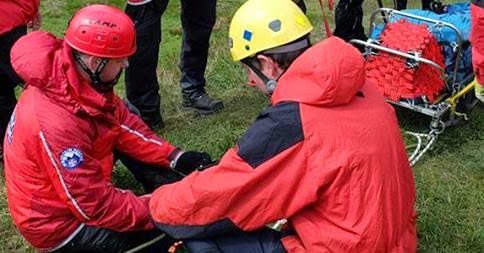
A rescue team in action.
After four hours of being roughly carried to an ambulance and and a one and half hour journey onward to Manchester Royal Infirmary, Pryor was in a worse state. The surgeon at MRI, Wilson Hey, claimed that the casualty was so shocked he required a blood transfusion before he could be operated on, and that “the absence of morphia (morphine) with the transport had done more damage to the limb than the mountain.”

Now this Wilson Hey was quite a character. So convinced was he that morphine could greatly reduce suffering in casualties, he went around supplying morphine to the rescue posts without a licence and at his own expense. It is a very good job Hey wasted no time as the government deliberated over the use of morphine, it took fifteen years to get Whitehall to share in his surety in the analgesic drug. Hey argued that, “morphia reduces suffering, suffering produces shock, and prolonged shock causes death.” 

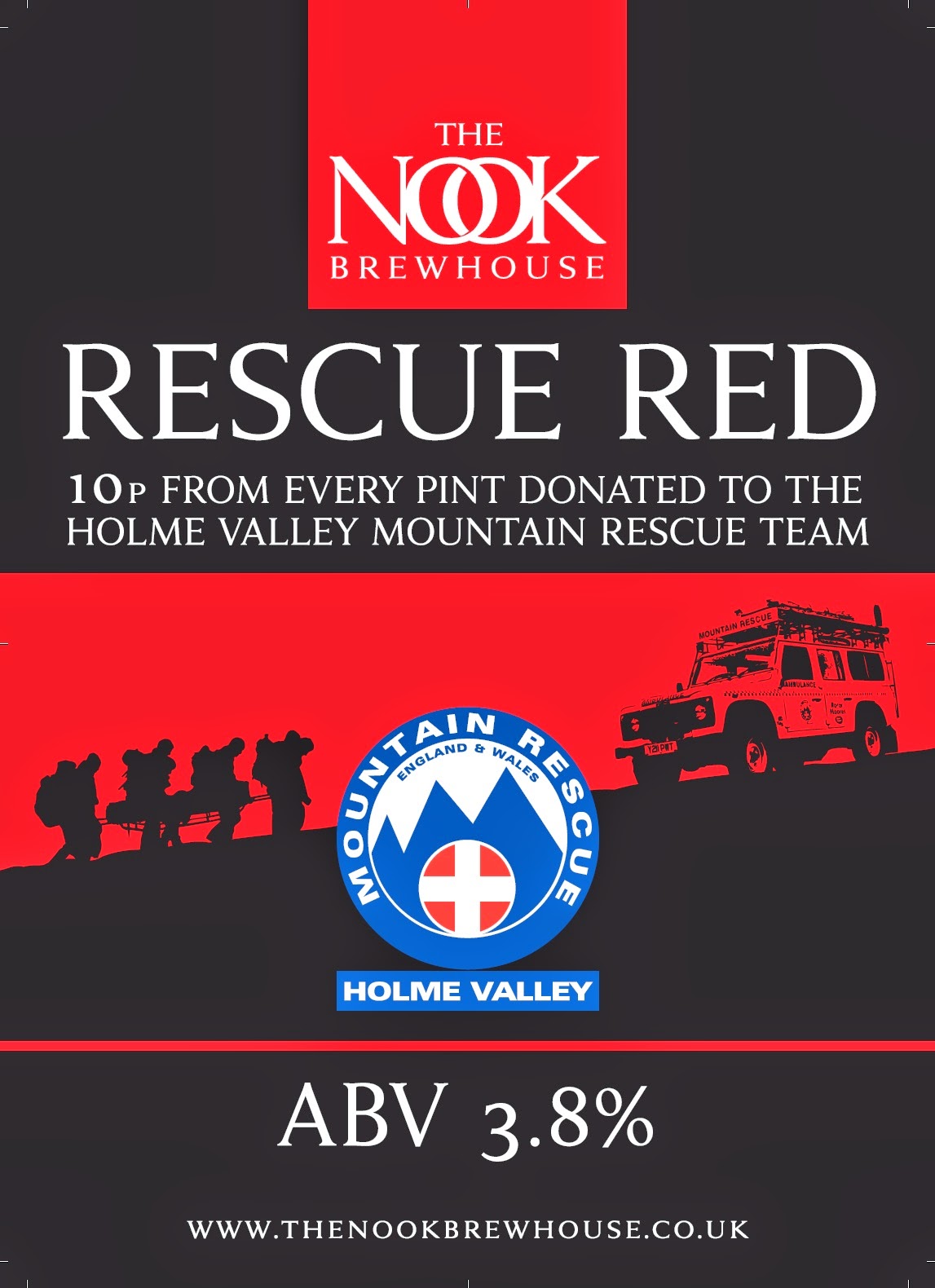
The Nook ale as mentioned.
By 1949, the government came round to Hey’s way of thinking and supplied a stock of morphine to each post, more going to the likes of Glencoe. The use of morphine in the mountain rescue cases is the huge legacy Wilson Hey left and will have undoubtedly saved a great deal of suffering and lives in a relatively short space of time. Today mountain rescue teams (MRTs) have an authorised morphine dispenser in their team. 

The first two MRTs most similar to those that operate today were Coniston and Borrowdale’s (Borrowdale MRT now Keswick) MRTs. The Coniston Team formed in response to the search for Ernest John Harris Sivyer who in December 1946 headed up onto the fells at first light and did not return. An assembly of locals set out to search the area around Dow Crag and Coniston Old Man but to no success. The following day 50 policemen and farmers joined the search in terrible conditions and Sivyer’s body was found having fallen around 400 feet down a gully. Following this exhausting effort, the first civilian mountain rescue in England was established, led by Jim Cameron. 

A 21 hour rescue effort on Great Gable to save a climber who had fallen from the Sharks Fin resulted in the Keswick team’s formation as another tiring effort in terrible conditions emphasised the need for a dedicated force. 

From here the teams sprung up in the individual areas to deal with the needs in their catchments and today work together both through the national body and locally to bring a first class highly trained service to those in need. 

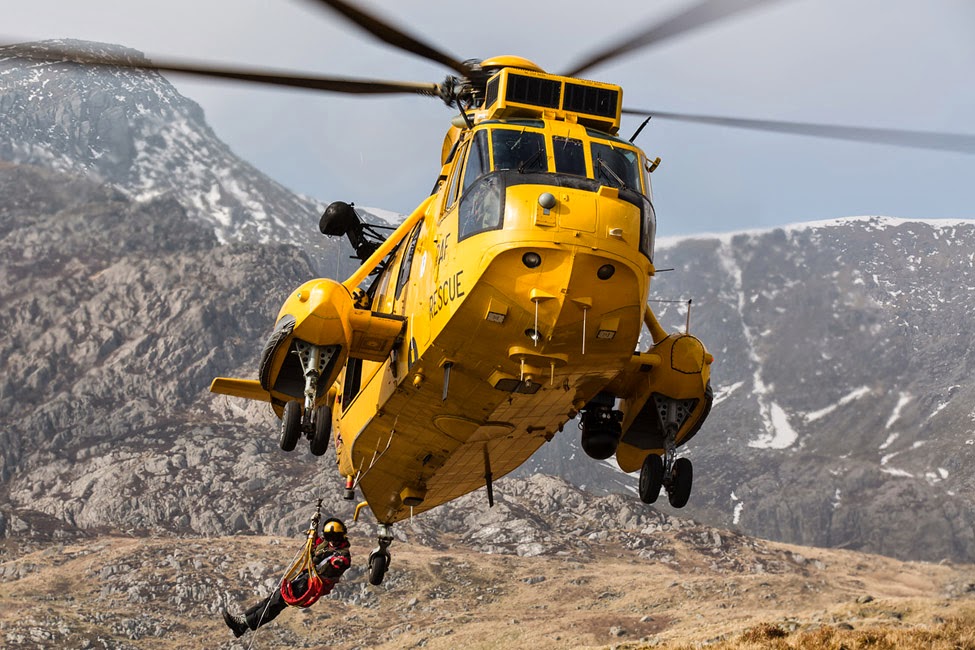
A RAF Sea King, working alongside the Mountain Rescue
Run by just volunteers, the MRTs across England, Scotland and Wales function because of the generosity of others. If you have a local team or know of one that could someday be there for you at your favourite destination, try and show some kind of support, whether it is taking part in the various fundraising events they host, buying a t-shirt for a fiver or making some kind of donation. One of the ways I support my local MRT is by drinking a certain beer. Yep, you heard correctly. One of the local pubs nearby brews their own beer and donates 10 pence per pint they sell to the Mountain Rescue. The beer is brewed by the Nook Brewhouse which has been mentioned on Fell before. The ale is called Rescue Red, which I hope to feature in the near future. A link below will take you to the pages of my local MRT and the Nook’s website for your perusal.  

National Mountian Rescue: http://www.mountain.rescue.org.uk


Cheers


#TeamFell   

Arête

THE word arête comes from the Old French areste, meaning spine or fish bone, but the modern definition of arête is a sharp, narrow mountain ridge or spur. 

Sharp Edge on Blencathra is a fine example
of a Lakeland arête. Picture courtesy of
StridingEdge
As a landform an arête is a knife-edge ridge. When two corries run back to back the formation left in between is known as an arête. Each side of the ridge would be eroded by glaciers and as the edges become steeper the ridge gets narrower.

In England we have some fantastic examples of arêtes such as Striding Edge on Helvellyn between the Nethermost Cove and Red Tarn corries, or Sharp Edge (formerly Razor Edge) on Blencathra between Tarn Crag and Foule Crag. Arêtes provide some fantastic walks with staggering viewpoints and scrabbles to raise the heart rate. But they are hazardous and should be treated with extra care and respect. 

Cheers 


#TeamFell

Hi-Tec Para Boots


THIS is the first of many gear reviews to come, so lets begin and take a look at the Hi-Tec Para walking boots. 

Before buying these boots I was looking for something below a hundred quid but that was waterproof and hardwearing. 

These Para boots from Hi-Tec fitted all my pre-purchase requirements as a wellie/boot hybrid formed from a rugged rubber upper. This, paired with a chunky high traction Vibram outsole made this offering from Hi-Tec a very attractive prospect. 
The Vibram sole on offer


Out of the box the Para’s were comfortable and very fit for purpose, but a little on the heavy side, larger due to the hefty but necessary sole. 

To describe the look is very difficult, it really is a mid cut walking boot with a wellington styling. Not easy on the eye at all but the thick set contours inspire an all-terrain confidence and gives you a ready for anything attitude. 

Despite these boots being Hi-Tec (a brand of lesser premium) I was expecting this pair of clogs to withstand the test of time and survive a nuclear winter should they need to, and show very little signs of external wear while doing it!

Unfortunately the time that the boots spent with #TeamFell was short lived. 

After wearing them in for a few local walks, they came up to the Lakes in May with us. On the first full day up there, while crossing a shallow stream, (and when I say shallow, I mean it! The water barely came over the level where the sole met the upper.) I felt a quick inflow of fresh water.
Side view of the Hi-Tec Para's

Sigh. 

The soggy sock and memory of parting with seventy quid for these boots tried it’s best to dampen my spirits. Once I trudged a bit further and forgot about the disappointment of my military looking footwear falling well short of my expectations, the views of the Easedale valley cheered me up. 

Now, the leaky sole/upper joint was the worst of it, but having dried them out overnight, I persevered for a couple of days until the insole in the opposite shoe came fully loose and would cling to my socks like a parasite at the end of every subsequent days walk. 

Upon returning home, I got a full hassle free refund from the supplier, whether my pair was one rare faulty disaster or not, multiple problems within a month of purchasing them had shunned any faith I had in trying out a fresh pair. 

If you own a pair of these and they are working perfectly make sure you speak up in the comments and let the readers know your experiences. Likewise if your Para boots suffered a similar fate to mine, do tell. Any feedback would be fantastic for a prospective buyer considering this product.

Maybe I just got the unlucky pair.

Finally it is worth mentioning a couple of points. I would not recommend these boots, if like me your extremities stay warm constantly, my feet roasted in these. Some websites refer to the Hi-Tec’s as mud/snow boots, and in warm weather the consequential lack of breathability from the rubber construction really does harbour the heat waves and made these hotter than I first expected.

Pro: Good fit (size 11)

Con: Build Quality

Don’t forget to subscribe, your support makes a huge difference to us! If you know anyone who shares your passion for outdoor gear and everything else we do here, please point them in our direction.    

Cheers

#TeamFell

Helvellyn

DURING a lovely week in August, the decision was made that we would tackle Helvellyn, the second highest peak in England (according to the Marilyns criteria). With it’s lofty altitude and engaging name, we found ourselves parking up in Patterdale, a stunning village boasting numerous pubs and hotels and terrific valley views which it shares with is close neighbour Glenridding.

On the way, we traversed through the beautiful, high Kirkstone Pass, having come from Coniston via Ambleside and we commented on the scenes out of the rear-view mirror as we climbed the locally known Struggle, they were simply flawless and that was just from the car.

Now out of the car with packs strapped up and boots well tightened, we set out with the help of a fantastic water resistant enlarged (1:16000) ordinance survey map sheet from The Yellow Walk Maps by Yellow Publications, it only cost a couple of quid from Summitreks in Coniston.

As we rose from Patterdale, headed for the valley between St Sunday Crag and Birkhouse Moor, the trademark lakeland sound of RAF practice flights rumbled through every stone and fell and reverberated like some great drum. The sound desperately in pursuit of the incredible blur that had long since passed ahead of it. 

Only when the sound had disappeared toward Ullswater did we continue upwards and eventually to Waterfall Woods.  We followed the beautiful single track road until you reach a gate. At this point we took the bridge crossing the tranquil, shallow, wide Grisedale Beck to the right. 

The view from Grisedale Beck before starting to climb.
Immediately across this was the point where the photograph behind the Fell logo at the top of this page was taken. Onwards we went through a short uphill stretch of sheep pasture which lead us to the real beginning of the ascent. From this point the way ahead climbed steadily for well over two hours until we caught site of a famous Helvellyn view; the hole-in-the-wall. 

It is definitely worth mentioning the absolutely stunning views on the way up the path. This is not a walk in which the only entertainment or purpose is reaching the summit. The end of the valley you can see as you walk upward is a magnificent back drop with Nethermost Pike and Dollywaggon Pike providing a formidable vertical stop gap to fill the landscape with scree and crags. 

As you turn anti-clockwise, now looking to about ten O’clock on an imaginary clock face a flawless ‘U’ shape can be seen between sky and slope, the opening into the Grisedale Tarn corrie. Further anti-clockwise is St Sunday Crag and it’s impressive rocky outcrops that punctuate the undulating lines to its summit. 

Striding Edge from High
Spying How
What was still hidden was the peak that we were on route for, the infamous plateau of Helvellyn. Once through the hole-in-the-wall, the pleasant and purposeful ascent to the start of Striding Edge passed by under excited steps. At the highest point on the ridge, High Spying How, the spine like, sharp arête threaded out in front of us. 

From this viewpoint, above it, my first thought was ‘Wow’! Then ‘How’? How was something so uncanny formed? One thing you don't register until you are on the ridge and in the middle of your crossing is the differing levels to the path, it rolls and contours, from the start it honestly looks far more level. You need to be comfortable with climbing up one surface and like walking a see-saw, be equally adept in keeping your footing on the corresponding downslope.


I got onto the ridge, I took a few tentative steps and then found my head for heights and feet for fells, and there I was! Like a tight rope walker, on a great serrated knife-edge striding on Striding Edge. It is an exhilarating feeling, but in that moment and even now reminiscing, the overwhelming emotion was pride. I felt proud of myself. It was a personal achievement, something I had wanted to do for a long time. In the moment I was taking it all in and thinking I’m really here! That is the love that I hold for the fells and mountains of the Lakes, it is very difficult to explain so I hope you can empathise with me for how I was feeling in that moment! 

A small amount of scrambling was needed as
Jasper works out his path.
Claire on the other hand was the polar opposite. In comparison to me, who knew what Striding Edge has in store for us, Claire was flabbergasted. The realisation that that whetted, protruding ribbon of land, linking High Spying How to the Helvellyn massif was the path we had to take, well the surprise was clear to see. 

Just take one step at a time. That old cliché, was what Claire was telling herself. Once she got onto the arête though, those common words couldn't unfreeze her legs. It was the drops on each side that unnerved Claire that day and the jagged form that the weathered stones take up there in the height. 

As I had strayed ahead in blind enthusiasm, it fell to a returning family coming in the opposite direction to be the catalyst to get Claire moving again. The mixture of peer pressure and the simple advice, “stick to the middle and you’ll be fine” got Claire headed towards the summit once more. 

At times further into Striding Edge, Claire recalls crouching and holding on as she became benumbed once or twice more. I advised her to get down on the goat track until later on, where footing is better and you only have to fight a mental battle to your left as the path is for the most part lower on the ridge to the right side leaving only that flank exposed to any episodes of sudden vertigo. 

The western view from the Helvellyn summit.
Some of you I’m sure will be wondering where in all this had Jasper got too? Well, as soon as I had lifted him over the hole-in-the-wall, he was again in the lead. This meant he wouldn’t be causing me any unwelcome stumbles at the point when the lead became taught. He earned his stripes up there. He is a fit a dog as you will meet. Between the family he gets walked a considerable distance almost daily, so endurance wasn't ever a worry. But the terrain was. Yet he calculated every step. If he picked a wrong route he would retrace his steps and follow another more dog friendly surface. 

In comparison to other walks he does on the moors and hills around Holmfirth, this was a different dog, who seemed to understand the seriousness of the occasion, and the care and attitude that was needed that day, without losing any of the pleasure of being in such a rare and beautiful location.

Red Tarn and Striding Edge from the path leading to Swirral
Edge with St Sunday Crag in the background.
After about an hour and a half on the edge we reached what is known as the chimney, a natural choke point which can be bypassed by the side path, but at this point in time I had Jasper by my side and Claire, who refused to stand up, sliding along Striding Edge on her bum, following closely behind.

Now the chimney is  a ‘V’ shaped exposed stone gash, that drops steeply, like a narrow vertically rotated ravine. I got into the chimney and found there was plenty of footholds to descend on but this was a far too bigger drop for Jasper to dive down, Claire edged him on his harness onto my shoulder and I climbed my way down with two feet and one hand.

Just in case Striding Edge wasn't enough for you, looming above you now is what W.A. Poucher described as ‘The Abyss’, a sheer slope of angular rock and scree divided only by a path that hairpins its way up to the sanctuary that is the plateau. 

A panoramic shot, featuring two Jaspers, two of me and a beautiful eastward backdrop.
There was a point near the base of the abyss where I thought that I would have to pick up Jasper again, but I was proved wrong with such impetus. I wish I wasn't so surprised by the manoeuvre he pulled off for I would have loved to to give you some photographic evidence. He seemed to dislocate his legs in order to get grip on the smooth, boot-polished surface on either side of him and then, like a spider in a hurry, masterfully scrambled upwards. Then he was off up on the easier but loose path surface that led still blindly to the summit.

Now, this was another point in time that Claire froze. Below me, I could see her hugging onto the rock face, practically digging her nails in as to not let go, and fighting back tears. She told me later that all she kept thinking was that she'd come too far to turn back. It was either climb up the hellish ascent, or wait for a passing helicopter to rescue her, and though the latter was tempting, she opted for the more sensible option. She just kept muttering under her breath "If my mum could see me now..." Soon enough, her torture was over, and the climb became more of a walk (I say walk, but Claire refused to let go of the ground with her hands so she was more like crawling to the peak).

By the time the two humans in our company had caught up with the canine companion, he had cleared the entire summit plateau of perched crows and rogue seagulls before stopping to admire the view. 

The Helvellyn ridge leading to White Side, with the majestic
Skiddaw and Blencathra to the north.
Up there, at the peak of Helvellyn the 360 degree vista was magnificent, so clear was an array of mountains and fells, both near and far it both rewarded you for your efforts and inspired you to climb its prodigious neighbours. To the north, the rolling shapes of Skiddaw and Blencathra dominated that field of vision, while to the west and south west, the tops of Scafell and Scafell Pike, Great Gable, Glaramara, Harrison Stickle, Coniston Old Man and Wetherlam are all visible, while to the south the ridge to Dollywaggon Pike and Nethermost Pike gives way for a glimpse of Lake Windermere in the distance.  

Catstycam from Swirral Edge.
After encouraging Claire to her feet and enjoying some sandwiches on the sun drenched cross shaped shelter, we took some of the photos displayed amongst this colossal hunk of text and made for Swirral Edge, and the descent from the most incredible view I have seen to date. Now facing east, the immaculately formed peak of Catstycam is backed by the glittering Ullswater catching and reflecting the now late and falling sunlight. Behind that was the silhouette of the proud Pennines running north and south in a stable surety. 

Swirral Edge offered a good walk back down the other side of Red Tarn but having conquered Striding Edge hours earlier the wonders of this arête were somewhat outshone. The decision was made not to climb Catstycam simply due to the time constraints, but we will definitely be back to tackle that pristine pyramidal peak. 

With the tarn now almost within a stones throw, the dog took off to have a cooling swim and drink before going to merrily greet a couple of wild campers just setting up their gear for a night undisturbed beneath the night sky. From here, we simply headed back to the hole-in-the-wall and down the path we had climbed earlier, only this time not far from the sheep pasture and Waterfall Wood we caught a rapid glimpse of a great predator, the unmistakable black and white flash of an Osprey. 

Claire said, “never again!” I said, “fancy going round again?” 


Finally, a happy #TeamFell at the summit of the marvellous Helvellyn, what more can I say!
If you enjoyed this please give it a +1, as you can imagine more effort went into writing this recollection of our day than the day itself so if you think any friend or relative would also enjoy this please point them this way and don’t forget to get your e-mail in the subscribe box to the right and check back regularly, your support is massively appreciated. On behalf of us all:


Cheers

#TeamFell