Showing posts with label climbing. Show all posts

Friday, 24 July 2015

Mammut Comfort High GTX Surround Boots


MAMMUT make some awesome gear, agreed?

The connotation of quality with Mammut was the final selling point when I was looking for new boots.


Now some of you loyal Fellists may recall a previous gear review when we looked at the Adidas Terrex Fast R GTX boots. In fact I am considering doing a where are they now article as they are still in good nick.

Why then do I have new boots I hear you ask!

Having Viggo means I’m out walking daily and I don’t just do a mile here and ten minutes there. My working hours allow me to be doing around 3-4 miles a day minimum.

Still with me?

This resulted in me destroying a pair of Hunter wellingtons through winter and making excessive use of the Terrex’s.

My Adidas’s are still fully waterproof and intact, they have been looked after in terms of cleaning and re-proofing. All I have had to do is re-lace them.

But the slipping point so to speak is on the soles. I have given them so much hammer that they have started to smooth out. This is not a problem at this time of year on my dog walks. But do I want to be sliding down Loft Crag in torrential rain?

No do I heck as like!

I’ve digressed slightly, this is supposed to be all about the Mammuts!


Those long winded names from the manufacturers sometimes leave you pondering what it’s all about.

In this case the last part of these boot’s title refers to the newer updated type of Gore-Tex that has been used.

So what’s different about this Surround variant as opposed to the standard Gore-Tex?

It’s all about breathability.

You still get that all important waterproofing that we have come to take for granted from Gore-Tex but now the Surround variant offers enhanced all-around breathability.

These models that include GTX Surround are ideal for warmer conditions as the construction of the of this membrane releases more warmth and moisture.

From my previous boot review you may know that I like lightweight footwear, now had I come from a bigger, full leather boot and gone straight into the Mammuts I would have noticed a difference instantly. But in relative comparison with my Adidas Terrexs the difference is more subtle.

Basically after a full days hike your feet aren’t so sweaty!

Lovely eh!


Now what do I like about these boots?

Well they too are lightweight, my pair of size elevens clock in at approximately 1100 grams. That’s pretty good considering the high cut you get with them. So far I haven’t had any falls in them due to an ankle giving way.

The pick-up is fantastic because the deceiving big, high and chunky aesthetic kids you into expecting far more weight.


When on the lacing system and high cut combine to wrap your ankle up in a cloud of protection.

The toe band is made from a really tough rubber compound and the texture that it’s finished in is such a texture that it never looks any different. This is ideal after a load of rocky scuffs.

The grips are good. A harder rubber than on the Terrexs gives me the impression that these will be up to much more arduous treatment.

The styling on these boots is epic if you like a modern twist. The red flashes stand out nicely but are not overpowering. This model also comes in blue.

Summary time?

These boots are expensive, there’s no kidding there. They are retailing at around the £140 mark and around £125 in blue here.  (Not sure why blue is cheaper)

These boots have featured in Trail Magazine and the funny thing was, I’d had my pair about a month when they were in an issue.

I purchased my pair from the German site BergFreunde and wondered whether, due to them being imported I got them prior to UK release.

They are exactly what I expected and are performing really well.

Any surprises?

A couple I suppose…

The weight is an amazing feature and twinned with their toughness you know that these have been superbly built and expertly designed.

That’s left me happy with a pair of hard core boots and good looking ones at that.

Quickly, thank you for all your continuous support!

Cheers,

#TeamFell


Tuesday, 14 October 2014

Adidas Terrex Fast R Mid Gore-Tex Boot Review

TO begin, these are my everyday boots, they have done plenty of miles so this review is full of real life information.

Just an overview of the Adidas Terrex Fast R's.
These Terrex boots out of the box promise to be waterproof, lightweight, supportive and comfortable. And to give a small preview of what is to come, in my experience they have met all those promises and more.


The most important feature for me in these boots were the waterproof qualities, after my previous boots fell short of this requirement. The Adidas Terrex Fast R’s have a Gore-Tex membrane lining which suggests that it will keep out the water, protect you from the elements and keep you comfortable. I can vouch for the waterproofness of these shoes as I have relied on them in about half a dozen heavy wash out days of varying severity and in every case they stayed fully dry. From straight down saturating deluges to cross wind fuelled fell top cloudburst, I really can’t complain with regards to their weather resistance. 


After previously owning a glorified pair of rubber clogs, I really liked the lightweight attributes of these walking boots, the numbers given for a UK size 8.5 boot weighted in at 405 grams. Adidas achieve this by using innovative materials such as the abrasion-resistant air mesh upper and the lightweight EVA midsole. I have to confess that when trying on these boots in Blacks in Ambleside, I recall telling Claire that is was like having clouds on my feet! These are ace for long days walking as in my experience you don’t find yourself dragging your feet in these.

In the past I have had a few fatigued tumbles due to my ankles involuntarily deciding they had done enough. But since changing into these it hasn't happened. The key features that offer such support are in abundance on this shoe. The nice mid cut comfortably wraps my ankle and the Formotion heel unit inspires confidence at any gradient. Both these features when used in conjunction with the lacing system add up to a fantastic design. The snug fit throughout the heel, fore-foot and ankle mean that you have sterling support across the whole foot. The boots work hard for you and keep the foot in comfortable, healthy shape, overall the cut and heel unit are game changing for my feet.

That tyre rubber showing!
Closely linked to the support offered by these walking boots is the comfort. The moulded Ortholite sock liner welcomes you into the boots and keeps you tucked in all day, the insole does feel moulded to you. The Adiprene+ cushioning adds another degree of comfort to this shoe as on trails your feet feel as though there are no imperfections to the paths you walk.

Now coming onto protection and durability, you would expect a lightweight pair of sport hybrid walking boots to show it’s weakest hand here. Well, so far, there is no sign of damage to the boots as you can see from the photos and video and they have kept me in good nick too! The toe bar is a god send on this product, this area as you know takes the brunt of the hits and the addition of this to the Terrex’s adds years onto their life expectancy. The synthetic overlays on the air mesh upper also adds to the structural rigidity and all round 360 degree protection of the shoe. The solid Formotion heel unit stops any accidental rear knocks from doing yourself a mischief and stands up to really tough tests!
The eye catching modern appearance is a head turner
for sure!

Apart from the previous fairly generic aims of a boot, there are a few features on this shoe that make it stand out from the crowd. The first is the brand, a few people will say: “oh, Adidas they just make sports kit and football boots.” In my experience the Terrex range is really fit for purpose. 

Another thing that stands out is the looks and styling and this was one of the main reasons I went for this boot. Yes your traditional outdoor brands produce boots fit for purpose, of course they do, but the styling of these in relation to the price point made the decision easy. 

The grips show very little sign
of wear.
Other boots that I looked into prior to purchase were colourful examples such as: 

The Salomon Wings Sky GTX 2’s at £139.99


All these other modern, fresh boots are a fair bit more and as the Adidas Terrex Fast R Mid’s were just £95 on sale at Blacks, I made the leap so to speak.

The grip of these boots is certainly noticeable in comparison to my previous shoes and Adidas would say that it is down to the Continental tyre rubber that the soles are formed from that give great grip, especially in wet conditions. 

The lacing system is a nice touch too. The speed lacing works with a connected loop of lacing being tightened by a one directional toggle, with a release catch for loosening. This means no more stopping to tie soggy untied laces, should you need to re-tighten them, it needn’t slow you down, just a quick pull on the toggle and away you go. The system seems successful as my boots hardly ever need tightening even after a full days walk, and the aesthetic of the system adds to the overall modern appearance.
The instep of my UK size 11's.

Finally this product from Adidas is suited for someone who is fairly fast paced. Whether this comes in the form of a fell runner in need of a little more support or just a walker who likes the light minimal feel to these shoes, they still have enough grunt to protect you from the elements and keep you going all day. 

These are boots that can keep up with you!

The Terrex range offers many different cuts of boot and also have a ladies range too. I have been amazingly impressed by mine so I have to recommend them to you! Be sure to check them out!

If you havent watched it already be sure to go watch our video review of the boot, go on, do it now! 

Thank you to all the supporters we have, all the Twitter retweets don't go unnoticed so thank you! As always, get your email in the sub box and follow us on Twitter @TeamFell Check out our Youtube channel and spread shirt shop too!

Cheers

#TeamFell


Saturday, 6 September 2014

The Sun Inn, Coniston

AFTER a relaxing day rowing on Coniston Water with Jasper (dogs are allowed on the rental boats) we decided to try The Sun Inn for a meal. And oh boy, we picked well. We’d seen the place a few times, the first being the day we climbed to the peak of the Old Man of Coniston on a three peak circular walk, as it’s right next to the footpath you take up to the Coppermines valley.

It’s a beautiful 400 year old pub with gorgeous views which actually precedes the village itself in age. The interior is just how you you’d expect and old inn to look - dark yet cosy, with agricultural tools and fox heads decorating the walls. 

We sat down on a pew opposite each other with two pints of Tag Lag, Jasper lying at our feet after a long day attempting to chase ducks while on the boat, and took a look at the menu. 

The 400 year old Sun Inn and it's warm welcome
Oh wow! Sticky toffee pudding - (which we should shorten to STP because of the amount I am probably going to mention it on Fell!) I’ll make room for that. Greg decided to go with the whitebait to start, while I had nothing (I was preparing for dessert already). 

As a seafood newbie, who hasn’t eaten a great deal of shellfish or fish in the past, but is slowly developing an appetite for it, I liked picking the odd whitebait, nicely fried crisp with a semi-battered outer, and dunking them into a tasty dill mayonnaise. Although I made sure to decapitate them first - I’m not quite at the stage where I can eat fish heads just yet! 

They were very nice though, and a generous portion arrived at the table for the price.

For the  main,  I had half a roast chicken stuffed with black pudding. Beautiful. The chicken was juicy and flaky and the black pudding complimented the flavour of the chicken. Again this was a generously sized portion and disaster struck! I realised the horrific fact that I was full! No sticky toffee pudding for me. 

Meanwhile Greg was still hungry enough to demolish his steak and ale pie with chunky chips and veg. I don't know how he does it. The pie reportedly had lovely hefty pieces of steak and a rich, stocky gravy. Needless to say, the food was fantastic, and Jasper agrees too, as he enjoyed some scraps of chicken, steak, black pudding and chips from his spot under the table - lucky dog!

The staff and other customers were very accommodating and friendly, in fact Greg got chatting to the locals at the bar for ten minutes before I got my drink! And the owner even came over to check we were having a nice time and even went to get Jasper a dog treat as soon as he’d spotted those big brown puppy eyes staring up at him. 

Fantastic service all round; we were made to feel really welcomed. Great food, great inn, great people. We will be back, to eat another glorious meal (and hopefully next time save room for dessert) or come and stay in a room for a relaxing weekend away. 

We highly recommend it - so please check it out at: http://www.thesunconiston.com

Cheers 


#TeamFell

Tuesday, 2 September 2014

Black Combe

HOW do I know about a little peak on the southwestern coast of the lakes? And what is it that keeps pulling me back to it? What makes this a hidden gem?

Well, first it is important to offer a few facts, standing at 2,000 feet Black Combe is no giant, but it is certainly no slouch either. It stands some ten miles from any higher ground and is just four miles from the Irish Sea. 

Jasper on Silecroft beach with Black Combe behind.
Childhood Memories

From a young age my family would go unto the lakes for a holiday and stay at my grandparents static caravan in the village of Silecroft.  Silecroft boasts a cracking beach (shingle when the tides in and a vast expanse of sand when the tides in), a compelling golf course (which my grandad, dad, cousin and I would play), a train station, The Miners Arms which serves food, the caravan site and the pony trekking centre. 

One thing, above all else excited me back when I was young just as it does today when in Silecroft was looking upon that mountain. Exiting the caravan would result in being greeted by the awesome presence of Black Combe, punctuating the skyline, sometimes brooding, masked in a clouded guise. Peaceful and serene in the still sunlight, but colossal and forboding when skies grey and tempest comes. 

Puerile Pioneer

For a number of years I never managed to attempt a climb as I was simply too young. All in good time though, my dad, sister and I had a effort at Black Combe and got what I believed to be at the time to be about three quarters of the way up. 

In retrospect it was more like less than halfway! At that point having got past the steepest part of the ascent and come between a pair of thigh like spurs, the cloud came in and made visibility very limited. We ate our butties and headed back the way we came for Silecroft. 

Adult Accomplishment

It was a fair number of years until I reattempted and conquered the Combe. I’d stared at it from the beach, from the car when weaving along the A595 under it’s mighty foothills, and then finally in 2013, as a precursor to TeamFell, we traversed on a pilgrimage to Whicham church, where the ascent begins. In homage to years of imagination and vivid recollections of it’s stout silhouette we reached the summit.

Black Combe and all it's intricacies will be covered in far more detail in the Summits Tackled section. But here and now I want to describe to you what makes this climb is different to other more well known peaks.

On the first leg of the climb you rise up between two root like spurs and hit a steep section that gets the pulse up and while having a thirty second breather, turning round instantly gives you a staggering perspective of the Duddon Estuary. In good weather it gleams and shifts peacefully with Morecambe Bay behind it to the south. In truth all the way up the views are stunning. The Isle of Man is a westward landmark, while it is not until the summit (if coming from Whicham) that you see north and east. When you do though, it is well worth the wait. 

Jasper in a mac, on the summit of Black Combe. 
From this cornerstone, the view is cinematic, Black Combe is a guard standing vigil, protecting its taller inland counterparts to the north and west. As previously noted, Black Combe is ten miles from any higher ground. This gives you a feeling of status, topping a column far enough from interfering neighbours to harbour a full 360 degree vista. In my opinion it is worthy of far more recognition and visitors. I say this hesitantly, as one of the lovely things about walking Black Combe is the tranquility. It’s a little off the beaten track and so the desolate quiet is refreshing. In other words don't all go at once, this one is definitely best served chilled.

This pleasant walk has views in abundance, wildlife, peace and fun all wrapped up in a 2,000 foot package. Every year there is the Black Combe walking festival led by local guides who give even more background to the area and the mountain. It is absolutely worth making a note of the late summer weekend event for next year! 

On their website, www.walkingfest.org.uk there’s loads of really good walking guides with maps, including a good looking Black Combe circular. Ive also embedded a video from their site below as you can catch a glimpse of Black Combe in all its glory behind a couple of interviews regarding the tourism in the area. 

Finally, thank you for letting me share one of my favourite places with you and I hope I have done enough to get you to try it, and find it equally as fascinating and compelling as me. 

It’s just special. 

What Haystacks was to the great Alf Wainwright, Black Combe is to me. 

Please support Fell with as little as a +1 or subscribing in the email box in the sidebar or go all out and make us even happier by donating or purchasing some Fell merchandise from our online shop (link in the sidebar). My dream is to see someone out on the fells with a Fell top on, that would make me so chuffed! So go do it!

Cheers

#TeamFell    


Berghaus Mera Peak II Gore-Tex Jacket

THIS offering from Berghaus has caught my attention, which is why I am now sharing it with you. In a nutshell the Mera Peak II is a fully waterproof, versatile jacket, packed with top features. 

To elaborate, it has a two layer Gore-Tex lining for added breathability and waterproofing. The loose inner lining is said to add comfort and to be ultra-effective at dealing with perspiration, and has the Gore-Tex Extreme Wet Weather Guarantee. 
The Mera Peak II in Intense/ Twllight blue.


The jacket also features 5 pockets which if like me, you are always carrying loads of kit, be it dog whistles and treats or maps and compasses, there is plenty of room to stow away all your stuff. All the external zips are YKK AquaGuard, which feature a polyurethane coating which brings its water resistant attributes to the table. 

There is one internal chest pocket, two external hip pockets and two external chest pockets. 

While on the subject of zips, this jacket has what is known as pit zips. The pit zip is exactly what is says on the tin, a zip under the armpit. This feature was put in place to release heat and create air flow when exerting yourself and still needing to stay warm and dry. A tip that I have read is to unzip the front of the jacket by about a quarter to create a venting system to pull away excess heat.

Moving onto the hood, it comes folded extremely neatly in a high collar and is held down by a pair of pop studs. As for when the hood is unfolded, it features a peak with adjustable toggles to tighten not only the front edge of the hood but also behind the head to create a cap like fit, especially useful for when the weather really does come in! The rear toggle is designed to be operated with one hand for ease of use.

Aesthetically, this jacket has a good athletic cut, built to offer plenty of flexibility for a lll kinds of outdoor uses, while being totally fit for purpose with avery tough and durable laminated nylon exterior.

In black with the red trim.
To my knowledge there are three colours available, a subtle black with a tiny hint of red coming from the chest pocket zips, a brighter intense and twilight blue mixture with luminous yellow zips and a red featuring another two-tone mixture of extrem and tango red.

Finally lets take a look at the numbers; firstly, this thing only weighs 741 grams and for a durable outer like this with its double layer of Gore-Tex and an abundance of pockets that isn’t much at all. 
Now lets have a glance at how much this piece of good kit is going to set you back. Direct from Berghaus via their website it is currently listed at £250. 

A website where I have got a lot of my outdoor gear from is OutdoorMania. I presume not many of you will have heard of it but at one point they had a shop in Keswick but now they are mostly an online store. They have loads of outdoor gear that’s cheaper than other websites and shops and they are listing this coat at £179.99. Here’s a link to their site if anyone would like to have a browse. See OutdoorMania's site.

The Mera in Tango/Extrem red.
But the next price stumps all of the above as the item has just gone on sale. GO Outdoors have just placed this at £134.97 with a GO discount card, but they have limited stock in terms of colour and size available for online purchase.

As usual, I want to say thank you for all your support and if you are new to Fell, please subscribe by putting your e-mail into the sub box on the right near the top of the article and give us a +1 regardless of whether you are old or new! 

I’d just like to mention TeamFell’s Spreadshirt store, which is linked to the right, we have designed an array of shirts and accessories which both show your support and are useful for the outdoors, we are really trying to make a push on the breathable shirt for walking as they are made of 100% polyester, which unlike cotton doesn't disperse your body heat in the same way when the material gets wet. 

Cheers 


#TeamFell

The Solitary Male

HOW did we end up with just one golden eagle in England? Or did we? 

By official counts there is just one golden eagle left in England. The estimated 15-17 year old is situated at Haweswater in the Lake District. This may sound special but there is a sad side to this tale as our last man has not had a mate since 2001. The picturesque head of Haweswater in the Riggindale valley is a mighty home for the king of birds, but not alone. He should have a mate. 

Solitude

Every winter and early spring, the male plummets from it’s high perch and performs an awe-inspiring sky dance; a series of swoops and acrobatic dives, all in hope of attracting the attentions of a new mate. This amazing spectacle is all in vain though, as the RSPB claim there are no other Golden Eagles in England.

When I started looking into forums and threads about people’s opinions on whether the eagle as a species should be aided in a reintroduction plan, I found the results on the pro-bird forums were as expected overwhelmingly in support of a plan. But what really stood out to me was the amount of people who claim to have seen Golden Eagles in the Lakes, not at Haweswater, and sometimes claims of a pair. Now, you can believe what you want, but some of the posts were very informative and it made me rethink the surety of the issue. 

Conspiracy

Another interesting quote which I’ll now paraphrase made me take note. A man was birdwatching near his Lakeland campsite for a few days. He’d been watching a pair of golden eagles. After a couple of days studying the birds through binoculars, he was approached by a man in a jeep, who could be described as a warden of some kind, who asked what he had been watching. The man told the warden he had been observing a pair of Golden Eagles and the warden argued and dismissed the man’s opinion. 

Only when the birds appeared in view and our birdwatcher proved the point, going through the specification of the birds, did the warden change tact. He then admitted that he was here to monitor the Golden Eagles and was deterring the public from knowing what the birds were to keep tourists away. 

Other posts voiced their disappointment for the RSPB for not helping this magnificent bird due to the politics behind some local farmers and land owners not wanting Golden Eagles to be helped to populate the area.

Downward Trend

Even if there are a fabled few Golden Eagles, their numbers have definitely been on the decline. There are a few reasons behind the downward trend, some more factual than others. Golden Eagles have been reported in Cumbria since the 50s, yet some argue that the Lakes have become too occupied and noisy for the peace-loving raptor, and this could be a factor for the dwindling population in the Lake District. 

Eagles were shot and poisoned, which are a couple of reasons why only one male is left in England, as some land owners see the Golden Eagle as a predator to their livestock and needs to be eradicated. I can see the point and the reason for the action, but is there not more to this bird than a rumoured lamb here and there?

Nature’s Course

Dave Shackleton, an RSPB warden, claims that the best chance of a mate for our Lakeland male is a female ‘drifting down from Southern Scotland’. So what’s stopping a grand bird like these soaring the 30 or so miles south to the Lakes? 

There are over 400 breeding pairs in Scotland and the Scottish Natural Heritage are working hard to improve the habitats in the south for Golden Eagles to spread out from the Highlands and the Islands. But in recent history, windfarms and grousemoor management shooting estates have deterred and prevented golden eagles from venturing south. 

Some doubters claim that there is no point in helping a bird that our land cannot support a sustainable number of inhabitants. The more optimistic of thinkers point out that other than the Lake District, England has other high areas that could provide for the Golden Eagles of the future, such as Northumberland, the Peak District and Yorkshire with the Pennines, Dales and the North York Moors.

Now, as you know where I stand, as a boy who grew up with a poster of a Golden Eagle on his bedroom wall, I want to see the Golden Eagles freely in England once again and the future is looking bright as changes in Scotland may result in the natural movement of the regal raptors, southbound for the Lakes and the north of England.

The video below shows some of the natural changes in Scotland and the video even higher up the page shows the great birds in all their glory.

Be sure to follow us on twitter and subscribe to us here on Blogger and on Youtube. Finally, be sure to comment below with your opinions, we love to hear from you, and please give us a +1.

Cheers 


#TeamFell

The Mountain Rescue

IN England, mountain rescue is a free service, funded by charity. The mountain rescue teams around the country offer such exceptional service that it is hard to believe that their history is a relatively short one. Exploring the higher places of England for pleasure began as an enthusiasm of the rich. 


Before the formal mountain rescue was formed, any accident may be fatal as the unfortunate subject may be left for dead unknown or die of their wounds in transit due to the arduous journey over rough terrain with improvised rescue parties, which could prove too much for already damaged bodies. 

‘The leader does not fall’ is a climbing saying that was regrettably not so in the ‘Scafell Disaster’ in 1903. On the Scafell pinnacle a team of four climbers fell to their deaths after the leader slipped, to cause what was the worst climbing disaster that Britain had known. The increase of mountain related activity and subsequent increase in accidents, twinned with the lack of rescue provisions led to first aid and rescue equipment being placed in key areas and rescue posts. 

An accident at Laddow (Peak District) in 1928 was the catalyst for the formation of the Mountain rescue Committee. Edgar Pryor was knocked from the long climb stretch at Laddow in the November at a Rucksack club meet, he fell some 40ft and broke his skull and thigh. Makeshift rescue gear was made at the scene using what supplies were available, forming a splint from a rucksack frame was just one example of the improvisation that took place in a crisis at this time.

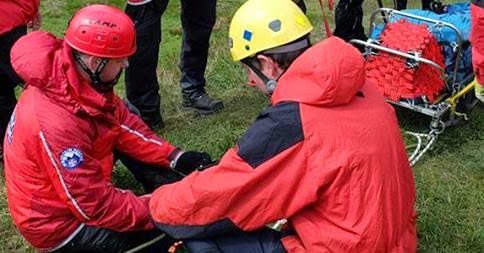
A rescue team in action.
After four hours of being roughly carried to an ambulance and and a one and half hour journey onward to Manchester Royal Infirmary, Pryor was in a worse state. The surgeon at MRI, Wilson Hey, claimed that the casualty was so shocked he required a blood transfusion before he could be operated on, and that “the absence of morphia (morphine) with the transport had done more damage to the limb than the mountain.”

Now this Wilson Hey was quite a character. So convinced was he that morphine could greatly reduce suffering in casualties, he went around supplying morphine to the rescue posts without a licence and at his own expense. It is a very good job Hey wasted no time as the government deliberated over the use of morphine, it took fifteen years to get Whitehall to share in his surety in the analgesic drug. Hey argued that, “morphia reduces suffering, suffering produces shock, and prolonged shock causes death.” 

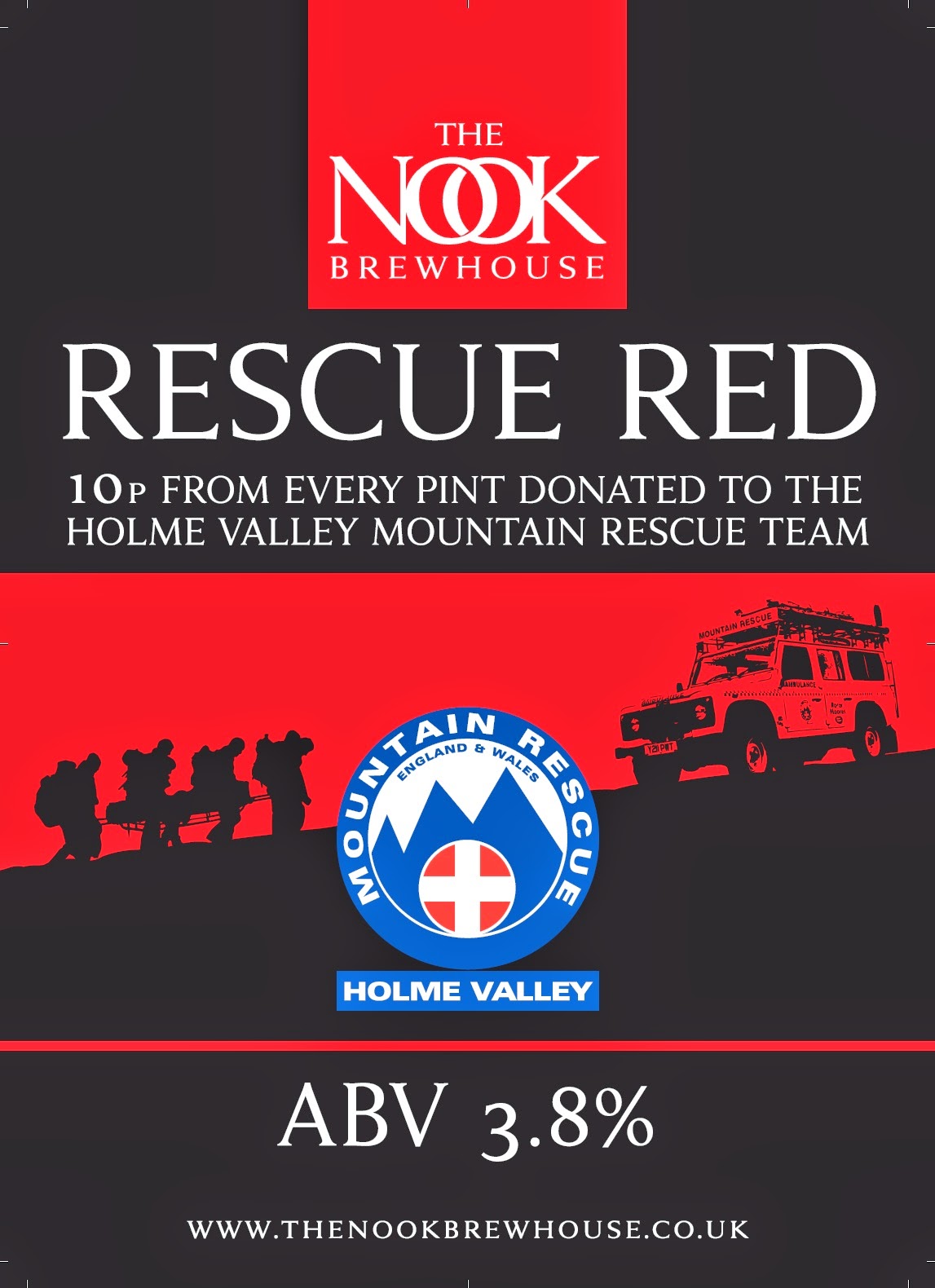
The Nook ale as mentioned.
By 1949, the government came round to Hey’s way of thinking and supplied a stock of morphine to each post, more going to the likes of Glencoe. The use of morphine in the mountain rescue cases is the huge legacy Wilson Hey left and will have undoubtedly saved a great deal of suffering and lives in a relatively short space of time. Today mountain rescue teams (MRTs) have an authorised morphine dispenser in their team. 

The first two MRTs most similar to those that operate today were Coniston and Borrowdale’s (Borrowdale MRT now Keswick) MRTs. The Coniston Team formed in response to the search for Ernest John Harris Sivyer who in December 1946 headed up onto the fells at first light and did not return. An assembly of locals set out to search the area around Dow Crag and Coniston Old Man but to no success. The following day 50 policemen and farmers joined the search in terrible conditions and Sivyer’s body was found having fallen around 400 feet down a gully. Following this exhausting effort, the first civilian mountain rescue in England was established, led by Jim Cameron. 

A 21 hour rescue effort on Great Gable to save a climber who had fallen from the Sharks Fin resulted in the Keswick team’s formation as another tiring effort in terrible conditions emphasised the need for a dedicated force. 

From here the teams sprung up in the individual areas to deal with the needs in their catchments and today work together both through the national body and locally to bring a first class highly trained service to those in need. 

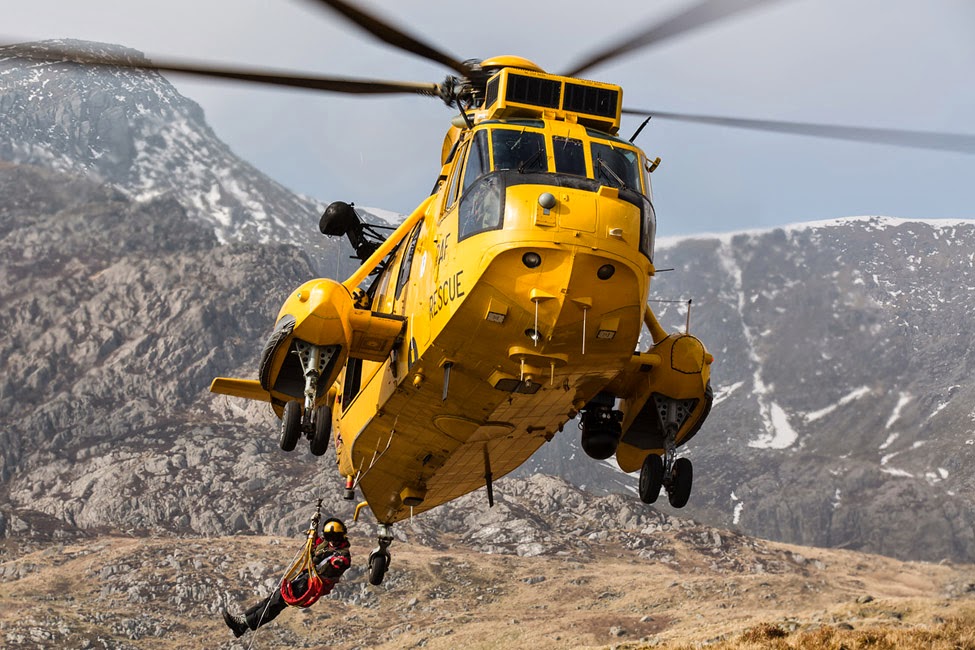
A RAF Sea King, working alongside the Mountain Rescue
Run by just volunteers, the MRTs across England, Scotland and Wales function because of the generosity of others. If you have a local team or know of one that could someday be there for you at your favourite destination, try and show some kind of support, whether it is taking part in the various fundraising events they host, buying a t-shirt for a fiver or making some kind of donation. One of the ways I support my local MRT is by drinking a certain beer. Yep, you heard correctly. One of the local pubs nearby brews their own beer and donates 10 pence per pint they sell to the Mountain Rescue. The beer is brewed by the Nook Brewhouse which has been mentioned on Fell before. The ale is called Rescue Red, which I hope to feature in the near future. A link below will take you to the pages of my local MRT and the Nook’s website for your perusal.  

National Mountian Rescue: http://www.mountain.rescue.org.uk


Cheers


#TeamFell